The Endowment
Advancing Yale’s mission and supporting its community
The Yale Endowment is the product of more than 300 years of generosity and is sustained by disciplined spending and prudent investment management. The Endowment supports every facet of our university, and contributes roughly a third of Yale’s annual operating budget.
We take a long-term, partnership-oriented approach to managing the Endowment. This approach has served the University community well, and the returns we generate continue to drive Endowment spending growth that provides robust, sustainable support of the University’s mission both today and for generations to come.
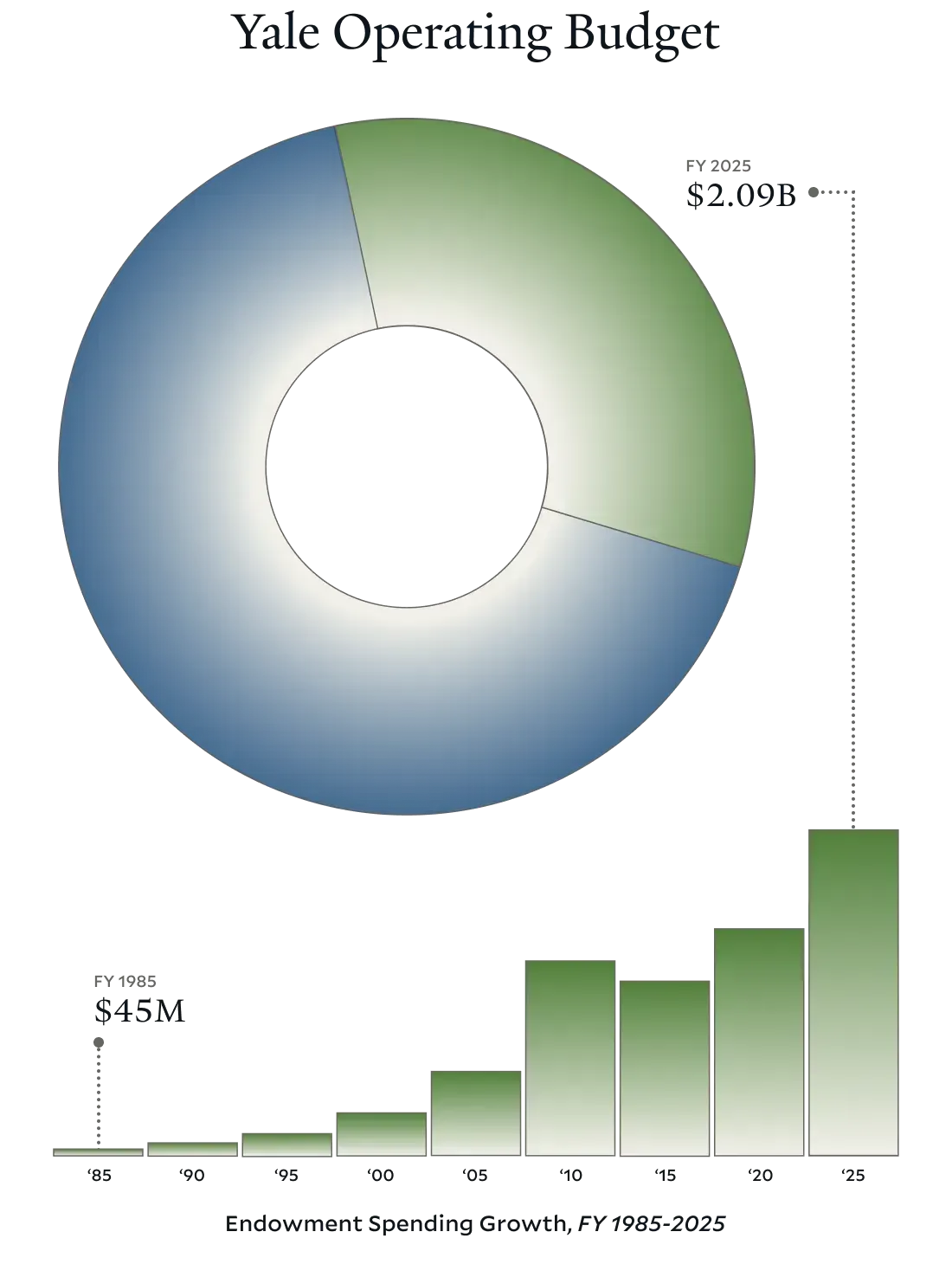
The Endowment’s impact is far-reaching
“Yale is committed to tackling the most significant human problems of the day. The Endowment helps Yale’s people—dynamic teachers, world-class scholars, pioneering researchers, committed staff, and enterprising students and alumni—carry out this mission. The Endowment reflects the generosity and care of those who came before, aids in the urgency of our present work, and assists us in building a better future.”
Scott A. Strobel
Provost

“Yale is committed to tackling the most significant human problems of the day. The Endowment helps Yale’s people—dynamic teachers, world-class scholars, pioneering researchers, committed staff, and enterprising students and alumni—carry out this mission. The Endowment reflects the generosity and care of those who came before, aids in the urgency of our present work, and assists us in building a better future.”
Scott A. Strobel
Provost
“Essential support from the Endowment makes it possible for Yale College to provide one of the world’s best undergraduate educations. It makes this education accessible to all students, regardless of their financial means; over half of them receive financial aid without requiring debt. I am grateful for the gifts of alumni and friends, and for how Yale Investments has multiplied these resources to benefit Yale sustainably.”
Marvin Chun
Former Dean of Yale College and Richard M. Colgate Professor of Psychology, Neuroscience and Cognitive Science
“Essential support from the Endowment makes it possible for Yale College to provide one of the world’s best undergraduate educations. It makes this education accessible to all students, regardless of their financial means; over half of them receive financial aid without requiring debt. I am grateful for the gifts of alumni and friends, and for how Yale Investments has multiplied these resources to benefit Yale sustainably.”
Marvin Chun
Former Dean of Yale College and Richard M. Colgate Professor of Psychology, Neuroscience and Cognitive Science
“Yale has an outsized impact on business and society, catalyzing a diverse range of endeavors. Income from our Endowment covers a significant portion of each student’s education, supports faculty research, and enables new initiatives aimed at improving business education. Yale Investments' disciplined management maximizes the resources available to us and gives donors confidence that every dollar they give will have a long-term impact.”
Kerwin K. Charles
Indra K. Nooyi Dean of Yale School of Management and Frederic D. Wolfe Professor of Economics, Policy and Management

“Yale has an outsized impact on business and society, catalyzing a diverse range of endeavors. Income from our Endowment covers a significant portion of each student’s education, supports faculty research, and enables new initiatives aimed at improving business education. Yale Investments' disciplined management maximizes the resources available to us and gives donors confidence that every dollar they give will have a long-term impact.”
Kerwin K. Charles
Indra K. Nooyi Dean of Yale School of Management and Frederic D. Wolfe Professor of Economics, Policy and Management
“Yale’s Endowment supports our leadership in law, economics, business, and medicine, as well as the humanities, arts, and science and technology. Every year, the Graduate School of Arts and Sciences admits just over 500 of the best students from a pool of more than 10,000 applicants. Our graduate students go on to become tomorrow’s pioneers, whether as scholars, researchers, industry leaders or educators.”
Lynn Cooley
Vice Provost for Postdoctoral Affairs, Dean of Yale Graduate School of Arts and Sciences, C. N. H. Long Professor of Genetics, Professor of Cell Biology and Molecular, Cellular, and Developmental Biology

“Yale’s Endowment supports our leadership in law, economics, business, and medicine, as well as the humanities, arts, and science and technology. Every year, the Graduate School of Arts and Sciences admits just over 500 of the best students from a pool of more than 10,000 applicants. Our graduate students go on to become tomorrow’s pioneers, whether as scholars, researchers, industry leaders or educators.”
Lynn Cooley
Vice Provost for Postdoctoral Affairs, Dean of Yale Graduate School of Arts and Sciences, C. N. H. Long Professor of Genetics, Professor of Cell Biology and Molecular, Cellular, and Developmental Biology
Governance and oversight
Yale’s Investment Committee brings extensive experience to its oversight of the Endowment, offering strategic guidance, reviewing asset allocation and investment decisions, and ensuring responsible stewardship of Yale’s resources.
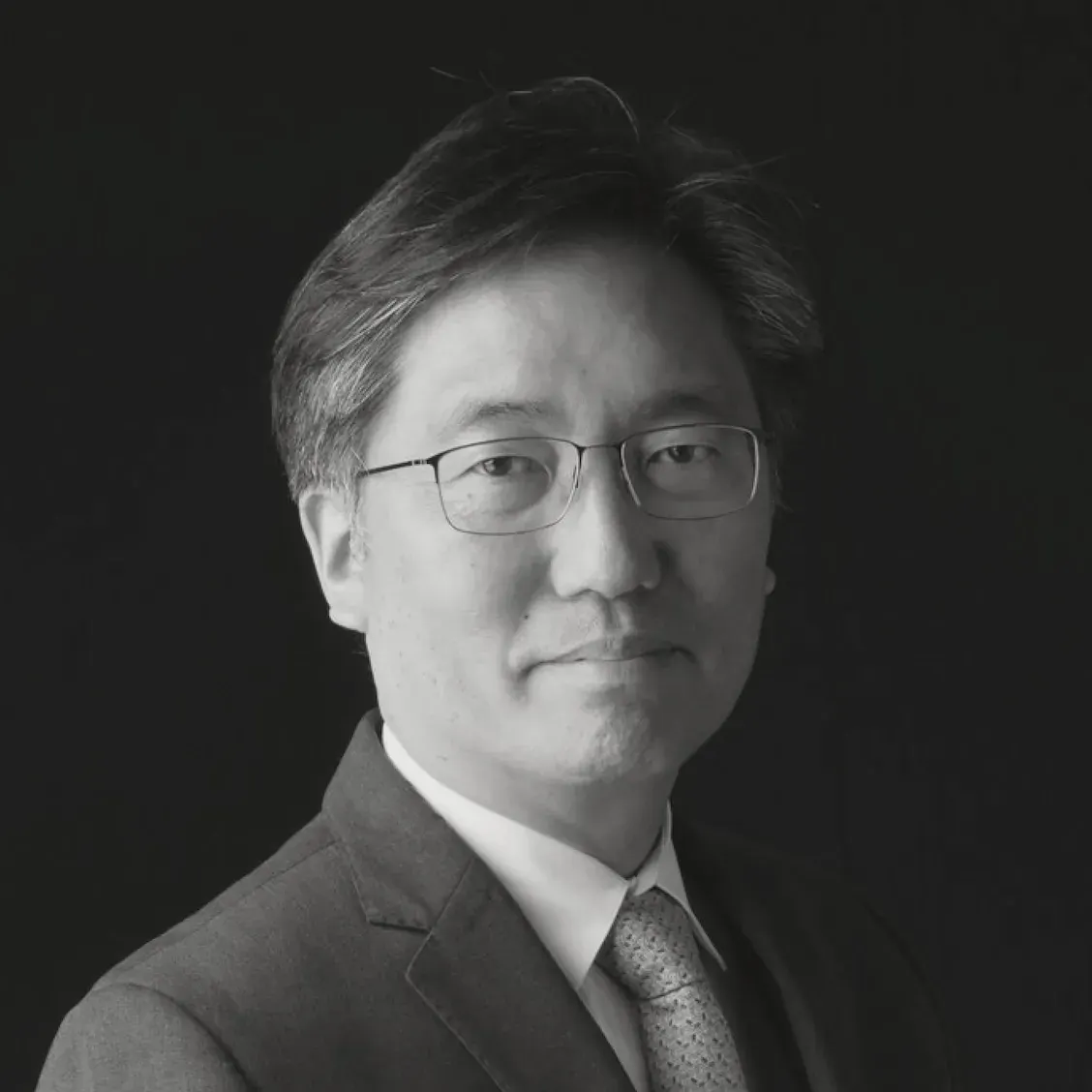
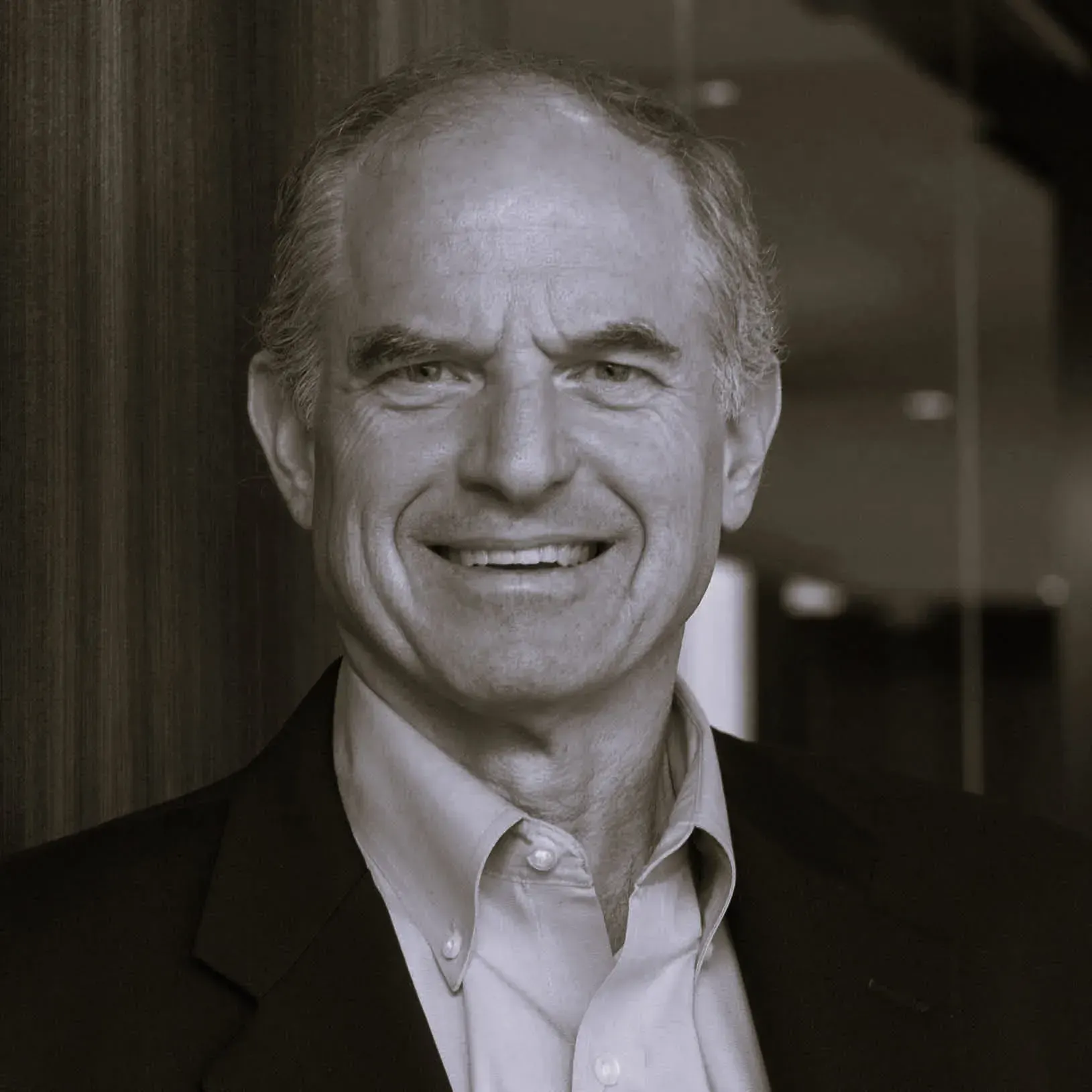
Investment Committee
-

Joshua Bekenstein '80
Managing Director and Co-chair, Bain Capital
-

Francis Biondi '87
Co-founder and Former Managing Partner, King Street Capital Management
-

Matt Cohler '01
Former General Partner, Benchmark Capital
-

Anne Glover '78 MPPM
CEO and Co-founder, Amadeus Capital Partners
-

Maurie McInnis '96 PHD
President, Yale University
-

John Shrewsberry '92 MPPM
Former CFO, Wells Fargo & Company
-

Carter Simonds '99
Former Managing Director, Blue Ridge Capital
-

Neal S. Wolin '83 '88 J.D.
Vice Chairman, Brunswick Group



FAQ
The Endowment is a collection of thousands of funds that have been designated to support specific aspects of the University’s core mission. Approximately 75% of the Endowment is restricted, which means that the university is legally required to use these gifts only for their stated purposes. Yale Investments manages the endowment funds as a single pool to ensure that future generations benefit from the same excellent resources available today.
Yale aims to spend 5.25% of the Endowment’s value each year, which accounts for over one-third of the annual operating budget. Over the course of a decade, Yale spends about half of the total value of the Endowment. The university’s spending policy is designed to smooth the impact of short-term fluctuations in the Endowment’s market value to mitigate disruptive changes to the budget when the Endowment value drops.
The Yale Model is an investment strategy pioneered by David Swensen and Dean Takahashi for institutional investors. The model is widely regarded as one of the most successful institutional investment strategies and has been influential in reshaping how university endowments and other large institutional investors manage their funds. The Yale Model promotes a long-term approach that prioritizes partnerships with the best investment managers to create a portfolio that is equity-oriented and diversified across asset classes.
Yale was one of the first universities to formally address the ethical responsibilities of institutional investors through a robust framework that has served the University for over 50 years. Born out of a cross-disciplinary seminar, The Ethical Investor: Universities and Corporate Responsibility by John Simon, Charles Powers, and Jon Gunnemann, was published in 1972. This seminal book explored the ethical, economic, and legal implications of institutional investing, especially by universities. In April 1972, the Yale Corporation adopted the suggested guidelines contained in the book. Since then, the university has relied on the framework to adopt a limited set of proxy voting and divestment policies across a range of social and ethical issues.*
While formal policies play an important role, the university’s values are reinforced daily by Yale Investments. We care deeply about our responsibility to our stakeholders and have zero tolerance for investments that do not meet the highest ethical standards.
*With respect to general corporate governance matters, Yale seeks to maximize long term shareholder value primarily by relying on third party investment managers. Yale’s policy is not to vote on Section 14A(a) and 14A(b) proxy items if Yale exercises voting power over the relevant security.
Yale’s longstanding policy is to preserve the confidentiality of its endowment holdings, chiefly to honor its contractual obligations to third party investment managers. Yale’s investment partners are among the best in the world and disclosing their holdings would erode their competitive advantage.
We also seek to maintain the confidentiality of our manager relationships, because a key ingredient to our success is identifying the best investment managers. Disclosure of those relationships would likely increase competition for access to those managers.
Yale’s Investment Committee and the Corporation Committee for Investor Responsibility (CCIR) have transparency into the portfolio upon request to provide independent oversight without damaging investment advantages for Yale and its partners.
Yale’s third-party investment managers typically have full control over the investments they manage. As a result, if Yale’s ethical investment policies change such that an existing holding becomes subject to divestment, our managers will seek to remove it from our account. Divestment timing will depend on the relationship Yale has with the manager, including the pre-existing terms of its contractual agreements. Occasionally, Yale has to hold the investment for a longer period of time due to its contractual obligations or the illiquid nature of the investment, but we diligently pursue divestment until it is complete.
Importantly, when Yale formally adopts a policy of divestment, it does not mean that Yale actually owns such holdings. In fact, it has been rare that the Endowment has actually held investments deemed ineligible at the time of such determination.
Although Yale’s Form 13-F lists securities over which Yale exercises investment discretion, it does not mean that Yale has invested directly in that company. In most cases, a holding listed on Yale’s Form 13-F results from a liquidating distribution of a security from a third-party investment manager or a gift to Yale.
Yale’s general practice is to sell the securities it receives from its managers or donors, subject to legal or other constraints. However, if the Form 13-F reference date falls between the date Yale receives its shares and the date Yale completes an orderly liquidation, a liquidating position will show up on Yale’s Form 13-F.
Yale’s Form 13-F may disclose holdings of index funds and/or exchange-traded funds (ETFs). Index funds are commonly held investment funds that track specific benchmarks, such as the S&P 500. Index funds and ETFs are employed by Yale Investments as a passive portfolio management tool to rebalance the Endowment and not as an active strategy. Unlike relationships with third-party investment managers, Yale Investments does not engage or interact with sponsors of index funds and ETFs.
Given the purpose and limited, passive use of index funds and ETFs in the Endowment and their ubitquitous use as a portfolio management tool, the underlying holdings of such funds are not subject to Yale’s ethical investment policy.